South Korea Tour Packages: Seoul, Busan & Jeju
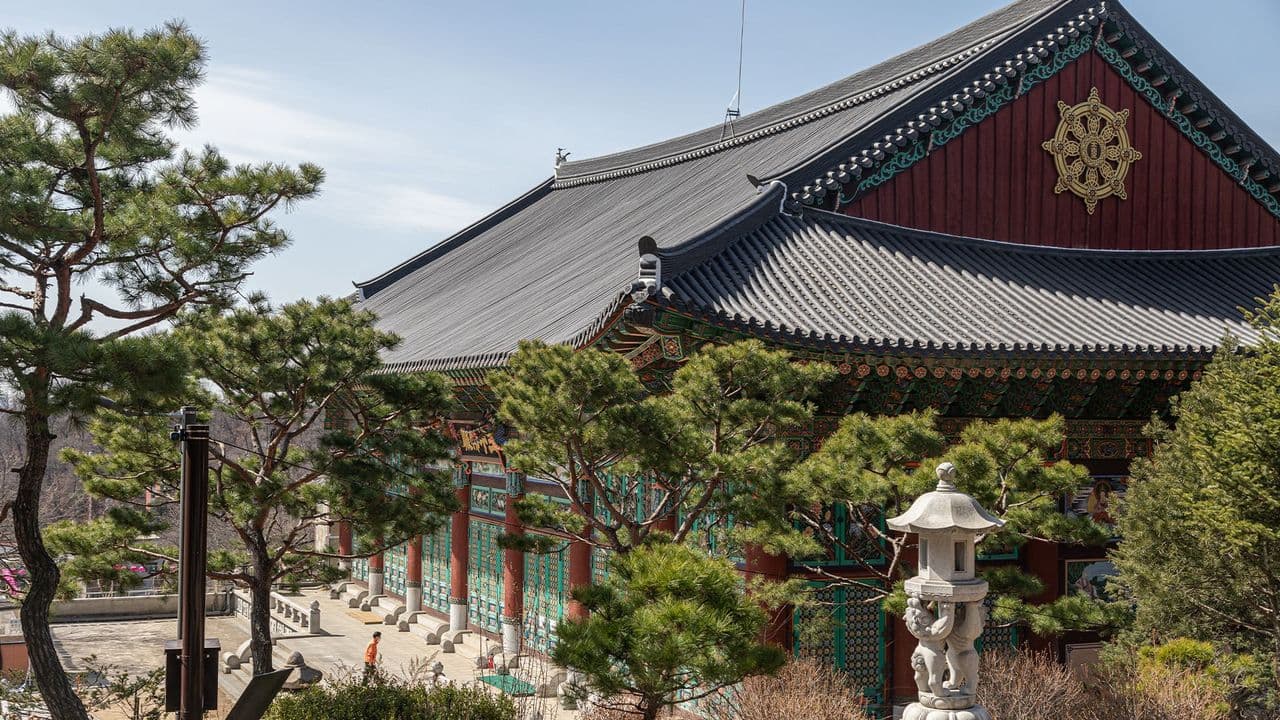
South Korea welcomed over 14 million international visitors in 2024 — and for travellers from Singapore, it consistently ranks among the top three short-haul destinations in Northeast Asia. The country delivers an extraordinary range of experiences within a compact geography: ancient palaces, coastal cities, volcanic islands, K-pop fan culture, world-class street food, and some of the most efficient public transport on the planet.
South Korea tour packages are increasingly popular precisely because the country rewards structured itineraries. The three major circuits — Seoul, Busan, and Jeju Island — can each be explored independently, but combining them into a single package unlocks a journey that moves from urban intensity to coastal beauty to volcanic wilderness, all within one to two weeks.
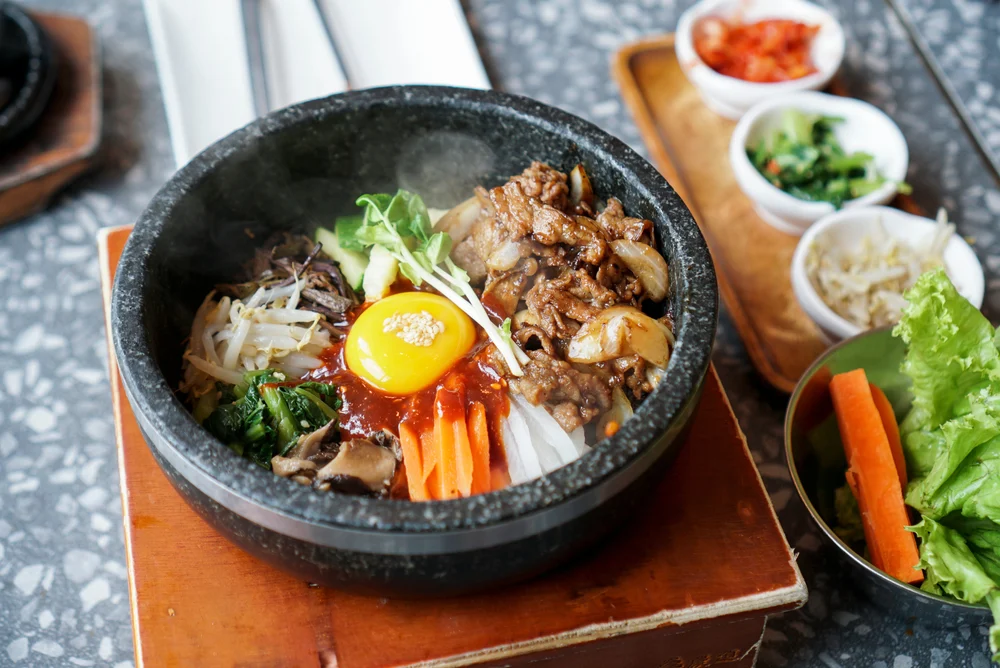
For Singapore travellers, the logistics are favourable: no visa required, direct flights to Incheon under 7 hours, and a country where English signage is reliable in tourist zones. The main planning challenge is sequencing the destinations correctly and choosing a package that matches your travel style — whether that’s culture-first, food-focused, or K-pop-driven.
This guide covers everything you need to know about South Korea tour packages: what each destination offers, how long to spend, when to go, and how to find the right operator for your trip.
Browse verified South Korea tour packages on FindTourGo — compare itineraries from trusted local operators and book directly.
Why South Korea Is Worth It in 2025 and Beyond
South Korea holds 15 UNESCO World Heritage Sites — from the royal tombs of Gyeongju to the lava tube system on Jeju Island. It spans four distinct seasons, giving it one of the widest windows of appeal of any destination in Asia. Spring cherry blossoms, summer coastal beaches, autumn foliage at ancient temple grounds, and winter ski resorts make the country genuinely year-round.
Beyond the scenery, South Korea’s cultural exports — K-pop, K-drama, K-beauty, and K-food — have created a new category of interest-based tourism that draws younger travellers from across SEA. A Seoul tour package in 2025 is as likely to include a broadcast music show recording as it is a palace visit, and that combination is precisely what makes South Korea unlike anywhere else in the region.
Infrastructure quality is exceptional. The KTX bullet train connects Seoul to Busan in under 2.5 hours. Subway systems in both cities are English-labelled and comprehensive. Credit cards are accepted almost universally. For travellers used to planning around logistics, South Korea largely takes care of itself once you’re on the ground.
Seoul: What to Include in a Korea Tour Package
Seoul is the natural starting point for any korea tour package from Singapore. As the country’s primary international aviation hub — Incheon Airport connects to over 180 destinations — almost every itinerary begins and ends here.
Culture and History
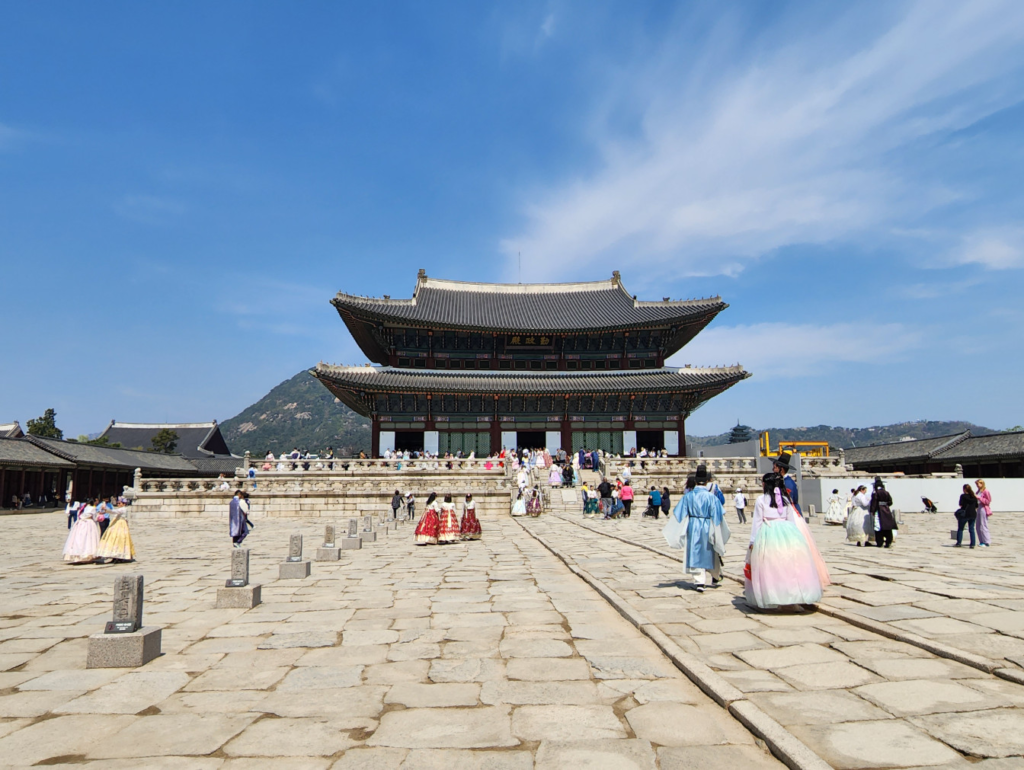
Gyeongbokgung Palace, built in 1395, is Seoul’s most iconic historical site. The changing of the guard ceremony at the main gate runs twice daily at no charge and is one of the most photographed moments in Korean tourism. Hanbok rental shops line the palace perimeter — wearing traditional dress grants free entry and produces the kind of travel photos that define a Korea trip.
Bukchon Hanok Village, a preserved residential district of traditional wooden homes situated between Gyeongbokgung and Changdeokgung palaces, offers the clearest window into pre-modern Seoul. Early morning visits (before 9am) reward travellers with near-empty alleys and soft light. It is also one of the most-filmed K-drama locations in the city.
Gwangjang Market, operating since 1905, is where Seoul’s culinary history is most concentrated. Bindaetteok (mung bean pancakes), mayak gimbap, and silkworm pupae served at communal wooden tables constitute one of the most authentic street food experiences in the country.
K-Pop and Contemporary Culture
Seoul’s entertainment districts — Hongdae, Seongsu, and Gangnam — each offer a distinct lens on K-pop tourism. KWANGYA in Seongsu is SM Entertainment’s flagship fan space. Hongdae’s street performance culture and concept café circuit attract daily crowds. The K-Star Road in Apgujeong is the most photogenic K-pop landmark in Gangnam. See our dedicated K-Pop Tour Korea guide for a complete breakdown.
Recommended Seoul Duration
Three days covers the primary cultural and contemporary highlights. A four-to-five day Seoul-only stay allows for day trips to Nami Island, the DMZ (Korean Demilitarized Zone), or the traditional village of Suwon.
Busan: The Essential Coastal Add-On
Busan sits on South Korea’s southeastern tip, three hours from Seoul by KTX bullet train (or 4.5 hours by intercity bus). For travellers building a Seoul Busan Jeju tour, Busan functions as a natural mid-point: less intense than Seoul, more dynamic than a beach resort, and genuinely distinct in character from the capital.
Top Busan Attractions
Haeundae Beach is South Korea’s most famous stretch of sand — 1.5 kilometres of fine-grain beach backed by skyscraper hotels, seafood restaurants, and a working harbour. Peak summer crowds are substantial; spring and autumn offer the beach with far fewer visitors.
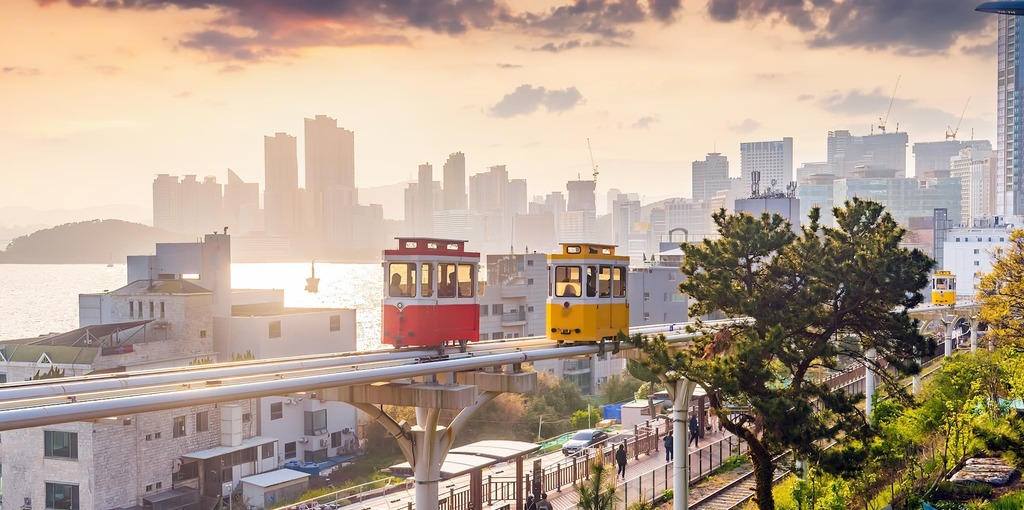
Gamcheon Culture Village is Busan’s most-photographed neighbourhood: a labyrinth of pastel-coloured houses climbing a steep hillside above the port. Nicknamed “Korea’s Santorini,” it was transformed from a post-war refugee settlement into an arts village through a community mural project. The maze of stairways, murals, and rooftop viewpoints makes it highly walkable.
Jagalchi Fish Market, Korea’s largest seafood market, occupies a sprawling covered hall on the waterfront. Fresh catches are sold on the ground floor; restaurants on the upper floors prepare what you select from the display tanks below. It is the most direct way to understand Busan’s identity as a port city.
Haedong Yonggungsa Temple is the rare Korean Buddhist temple built directly on the sea cliff rather than in mountain forest. The dramatic coastal setting — waves crashing below the prayer halls — makes it unlike any other temple visit in the country.
Recommended Busan Duration
Two nights in Busan is the standard for a south korea tour package that includes both Seoul and Jeju. A three-night stay allows day trips to the ancient city of Gyeongju (45 minutes by KTX), which holds the highest concentration of royal Silla-era tombs and ruins in the country.
Jeju Island: South Korea’s Natural Crown
Jeju Island, located 85 kilometres off the southern tip of the peninsula, is a UNESCO Triple Crown site — simultaneously a World Natural Heritage Site, Global Geopark, and Biosphere Reserve. It is the only destination in South Korea to hold all three designations, and the island’s volcanic landscape justifies every superlative.
Top Jeju Attractions
Hallasan National Park centres on the dormant shield volcano that forms the backbone of the island. The summit crater trail (Seongpanak route) is a demanding 9.6km one-way hike rewarded by views across the entire island and, on clear days, towards Japan. Reservations are now required for peak periods.
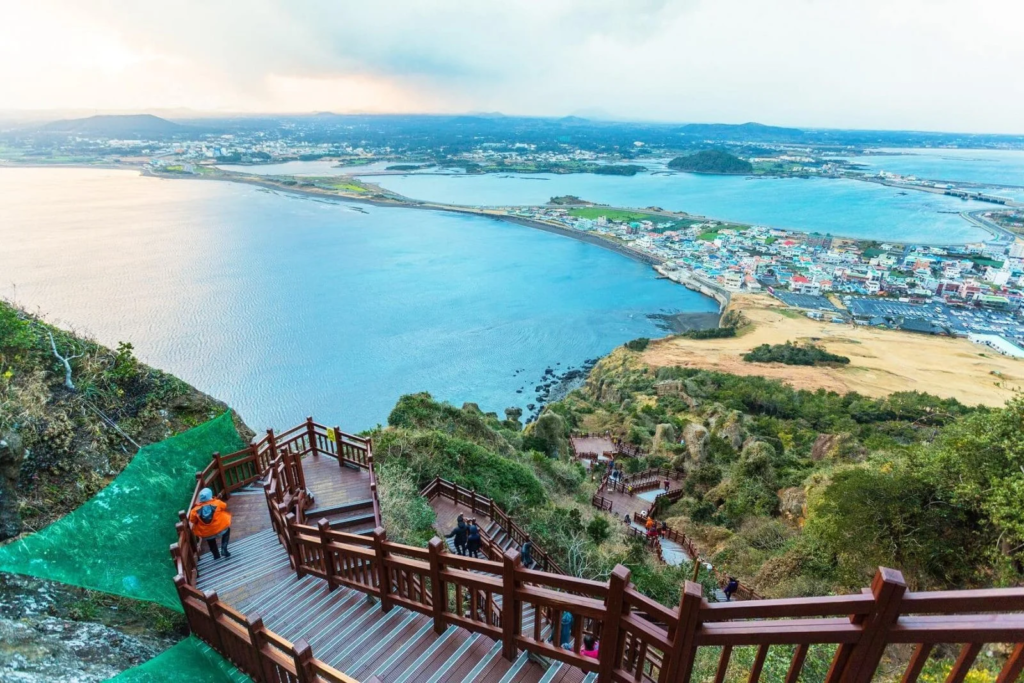
Seongsan Ilchulbong (Sunrise Peak) is a tuff cone crater formed by underwater volcanic eruptions approximately 5,000 years ago. The 180-metre climb takes under 30 minutes and the sunrise view from the rim — across the crater bowl and out to the surrounding sea — is among the most spectacular in Northeast Asia.
Manjanggul Lava Tube is one of the world’s longest lava tube systems at over 13 kilometres. The accessible 1km section open to visitors displays lava formations, columns, and a 7.6-metre lava stalactite that is among the largest known. The natural air conditioning makes it ideal on hot summer days.
Jeju Olle Trail is a 437km network of coastal walking paths circling the island. Individual sections (each around 15km) can be hiked as standalone day walks; the route through Seogwipo’s coastline is consistently rated the most scenic.
Getting to Jeju
Domestic flights from Seoul’s Gimpo Airport to Jeju take approximately 55 minutes and operate very frequently. Jeju Air, Jin Air, and T’way offer budget fares that can be as low as SGD 30-50 booked in advance. From Busan, ferries are an overnight option for travellers who prefer slower travel.
Recommended Jeju Duration
Three nights is the minimum for a meaningful Jeju experience — enough for Hallasan, Seongsan Ilchulbong, and a coastal drive. A four-night stay allows for the Manjanggul caves and a section of the Olle Trail.
Recommended South Korea Tour Package Itineraries
7-Day Seoul + Busan (Best Seller from Singapore)
| Day | Destination | Key Activities |
|---|---|---|
| 1 | Arrive Seoul | Myeongdong street food, Cheonggyecheon Stream |
| 2 | Seoul | Gyeongbokgung, Bukchon, Insadong, Gwangjang Market |
| 3 | Seoul | Hongdae, Seongsu (KWANGYA), Gangnam (K-Star Road) |
| 4 | Seoul to Busan (KTX) | Gamcheon Culture Village, Jagalchi Market |
| 5 | Busan | Haeundae Beach, Haedong Yonggungsa, local seafood dinner |
| 6 | Busan to Seoul (KTX) | Free afternoon in Seoul |
| 7 | Depart | Morning shopping at Dongdaemun or Namdaemun |
10-Day Seoul + Busan + Jeju
Extend the 7-day itinerary with 3 nights in Jeju, flying from Busan to Jeju directly (Korean Air and Jeju Air operate the route) before returning to Seoul for the international departure.
14-Day Full Korea Exploration
Adds Gyeongju (2 nights from Busan) and Seoraksan National Park (2 nights from Seoul) for travellers who want to move beyond the three major circuits into Korea’s most spectacular nature areas.
Best Time to Book a South Korea Tour Package from Singapore
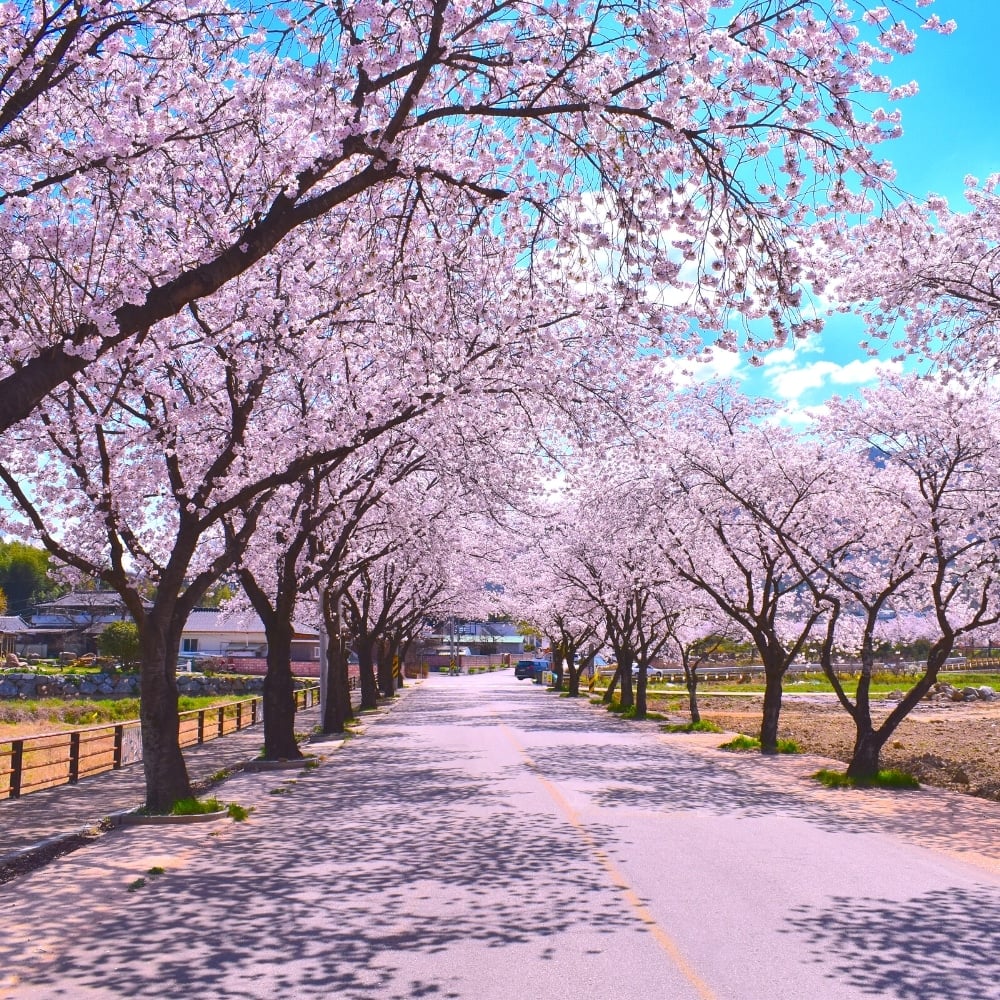
Spring (March–May) is peak season. Cherry blossoms peak in late March to mid-April in Seoul and early April in Jeju. Book two to three months in advance; accommodation fills quickly at this time.
Summer (June–August) suits beach travellers heading to Haeundae or the Jeju coast. Seoul is humid; air-conditioning is universal. Festival season runs throughout summer.
Autumn (September–November) is consistently rated the best season by repeat visitors. Foliage colours peak in late October at Seoraksan and Gyeongbokgung Palace. Temperatures are mild and crowds at cultural sites are manageable.
Winter (December–February) offers the lowest accommodation prices outside peak holiday periods. Ski resorts in Gangwon Province (2 hours from Seoul) provide an activity not available in warmer months.
FAQ
Do Singapore passport holders need a visa for South Korea?
No. Singapore passport holders enjoy 90-day visa-free access to South Korea. You will need a valid passport, a return ticket, and proof of accommodation. No advance visa application is required.
What is the best south korea tour package for first-time visitors from Singapore?
A 7-day Seoul and Busan package is the most popular first-trip structure. It covers Seoul’s cultural and K-pop highlights plus Busan’s coastal and food scenes, with KTX travel between cities included. Adding Jeju on a second visit is common once travellers know the base itinerary well.
How much does a South Korea tour package from Singapore cost?
Package prices vary by accommodation tier and inclusions. Budget group tours start around SGD 800–1,200 for 7 days (land only). Mid-range packages with 3-4 star hotels and guided activities typically run SGD 1,500–2,500. Premium packages with private guides and 5-star accommodation range from SGD 3,000 upward. Flights from Singapore add approximately SGD 300–700 depending on airline and booking window.
Is it better to book a guided tour or plan independently?
Guided packages are recommended for first visits because they handle KTX reservations, accommodation across multiple cities, and attraction entry. South Korea is easy to travel independently if you’re comfortable with navigation apps and basic Korean signage — but for travellers with limited days, a guided package eliminates logistics and maximises time at key sites.
Can I combine Seoul, Busan, and Jeju in one week?
A 7-day trip can cover Seoul and Busan comfortably. Adding Jeju in 7 days is rushed — you’d have 1.5 days on the island, which limits you to one or two attractions. A 10-day trip is the minimum recommended for all three destinations without feeling hurried.
Ready to Plan Your South Korea Tour?
South Korea is one of Asia’s most rewarding destinations for structured travel — and the right package makes the difference between a memorable trip and a great one.
Compare South Korea tour packages on FindTourGo — filter by duration, budget, and travel style, and book directly with verified local operators.
Looking for something more specific? Read our K-Pop Tour Korea Guide for fan-focused Seoul itineraries, or our Korean Food Travel Guide for the best street food markets and cooking class experiences across the country.