Vietnam Tour Packages: Hanoi, Ha Long Bay & Hoi An
9 minutes
3/9/2026
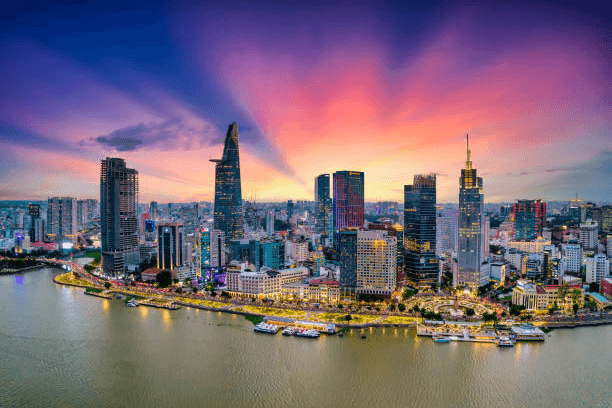
Vietnam tour packages offer some of the best value in Southeast Asian travel — a country where a single trip can span UNESCO World Heritage sites, limestone bay cruises, imperial citadels, and lantern-lit ancient towns, all connected by efficient domestic flights. Many travelers combine Vietnam with Thailand tour packages for a comprehensive Southeast Asia experience. For travelers from Singapore, Vietnam is remarkably accessible: direct flights to Hanoi and Ho Chi Minh City run multiple times daily, Vietnam’s e-visa system is straightforward, and the price-to-experience ratio is exceptional.
Vietnam welcomed over 17 million international visitors in 2024, and the classic north-to-south route remains the gold standard for first-time visitors. Starting in Hanoi, taking an overnight cruise through Ha Long Bay, moving south through Hue and Da Nang, and ending in the photogenic ancient town of Hoi An — this circuit captures the country’s extraordinary range within 10–14 days.
What distinguishes Vietnam from its SEA neighbors is the depth of contrast available in a single trip. The north is contemplative, layered with French colonial history and street food culture evolved over centuries. The center is imperial and melancholy, anchored by royal tombs and river sunsets. The ancient town of Hoi An is simply one of the most beautiful places in Southeast Asia, full stop. A well-structured Vietnam tour package threads these experiences together with minimal logistics stress.
This guide covers each destination in detail, what to expect from Vietnam travel packages, the best time to visit, and how to find the right itinerary for your travel style.
Why Vietnam Should Be Your Next Destination
Vietnam’s appeal is built on genuine diversity. Within a country roughly the size of Germany, you have northern mountain highlands where ethnic minority communities farm terraced rice fields, a 3,260km coastline with beaches ranging from busy resort towns to deserted fishing bays, and cities that blend French colonial architecture with the kinetic energy of one of Asia’s fastest-growing economies.
For Singaporean travelers, several practical factors make Vietnam particularly attractive. Direct flights from Changi take 2–3.5 hours depending on destination. Singaporeans can enter Vietnam visa-free for up to 45 days. The country uses the Vietnamese Dong, and the favorable exchange rate makes even premium experiences — a 5-star Ha Long Bay cruise, a tailored ao dai dress from Hoi An — feel remarkably affordable.
The food alone justifies the trip. Vietnam’s culinary tradition is one of Asia’s finest: pho in the morning fog of Hanoi, banh mi from street carts in every city, fresh spring rolls in Hoi An, and bun cha charcoal-grilled by neighborhood restaurants. Food isn’t a side attraction in Vietnam — it is the attraction. Dive deeper with Vietnamese culinary tours and cooking classes in Hanoi, Hoi An, and Ho Chi Minh City.
Ha Long Bay Cruise Tours: A UNESCO Natural Wonder
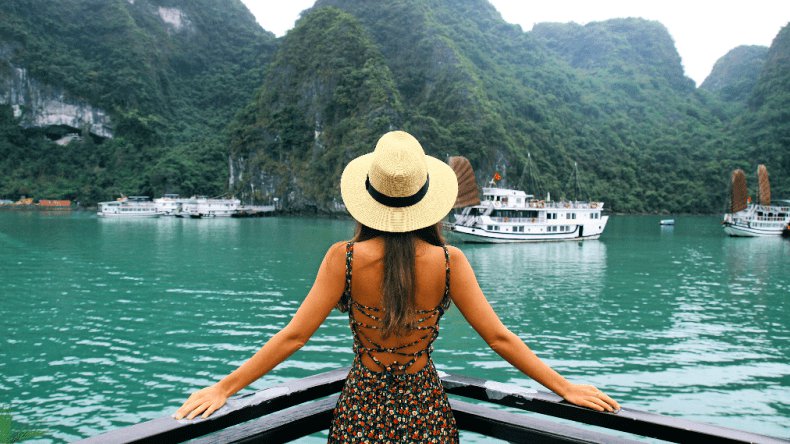
Ha Long Bay is the centerpiece of most Vietnam tour packages — and it earns the status. Over 1,600 limestone karsts rise from emerald-green waters across 1,553 square kilometers of Gulf of Tonkin, creating a landscape that feels prehistoric and dreamlike simultaneously. The bay has held UNESCO World Natural Heritage status since 1994.
Choosing the Right Ha Long Bay Cruise
The cruise tier determines the quality of the Ha Long Bay experience more than any other factor. Most cruises operate as 2-day/1-night or 3-day/2-night departures from Hanoi (4 hours by bus) or from the Ha Long Bay pier directly.
Budget (2-star junks): Simple wooden boats with basic cabins and set menus. Good for backpackers who prioritize seeing the bay over onboard comfort.
Mid-range (3-star): Comfortable private cabins, included kayaking and cave exploration, set-menu meals with fresh seafood. The sweet spot for most travelers. Expect USD 120–200 per person for a 2D/1N cruise.
Luxury (4–5 star): Spacious suites, spa facilities, private sundecks, à la carte dining, and access to quieter sections of the bay away from tourist traffic. Operators like Paradise Elegance and Indochine Sails set the benchmark. Rates from USD 300+ per person.
The overnight experience is far superior to day trips. Waking to mist rising off the karsts at dawn, with the bay almost entirely to yourself before day-cruise boats arrive, is among the defining travel memories Vietnam offers.
Hanoi: Vietnam’s Capital at Its Own Pace
Hanoi rewards travelers who slow down. The Old Quarter — 36 ancient streets named after the guilds that once operated there — functions as a living museum where silk shops, tin merchants, and paper goods sellers still operate from the same narrow shophouses their ancestors used centuries ago.
Essential Hanoi Experiences
Hoan Kiem Lake anchors the Old Quarter and offers one of the city’s most accessible morning scenes. Locals practice tai chi on the lakeside path from around 6am; the red Huc Bridge leading to Ngoc Son Temple is photogenic at any hour but magical in early light.

The Temple of Literature, Vietnam’s first university (established 1070), is one of Hanoi’s finest examples of traditional Vietnamese architecture. Five courtyards with pavilions, gateways, and turtle-stone steles listing imperial scholars’ names create a contemplative space that feels genuinely historic.
Street food is the third essential. Bun cha (grilled pork with noodles and fresh herbs) is Hanoi’s iconic dish — eaten at plastic stools on the pavement, surrounded by the organized chaos of morning traffic. Egg coffee (ca phe trung), invented at Cafe Giang in the Old Quarter, is thick, sweet, and unlike anything else.
Vietnam is affordable, but these budget travel tips for Southeast Asia will stretch your budget even further across the region.
Hue and Da Nang: Imperial History Meets the Modern Coast
The central section of any Hanoi Halong Bay Hoi An tour typically includes Hue and Da Nang, connected by one of Vietnam’s most dramatic road journeys — the Hai Van Pass, offering panoramic South China Sea views.
Hue: Vietnam’s Imperial Capital
Hue served as Vietnam’s imperial capital under the Nguyen Dynasty from 1802 to 1945. The Imperial Citadel — a walled complex modeled on Beijing’s Forbidden City — contains royal palaces, temples, and pavilions spread across 520 hectares along the Perfume River. Several of the seven royal tombs outside the city are accessible by boat, combining a scenic river journey with architecture of striking individuality.
Hue’s cuisine is considered the most refined in Vietnam — a legacy of royal kitchens that once prepared elaborate multi-course meals for the emperor. Bun bo Hue (spicy lemongrass beef noodle soup) and banh khoai (crispy turmeric crepe) are the essential local dishes.
Da Nang: Modern City, Ancient Mountains
Da Nang is Vietnam’s fastest-growing beach city — clean streets, a beautiful riverside, direct international flights, and the contrast of urban sophistication against dramatic natural scenery. The Marble Mountains (five limestone and marble hills rising from the coastal plain) contain Buddhist sanctuaries carved into cave systems, with summit views over the South China Sea.
The Golden Bridge at Ba Na Hills — a 150-meter pedestrian bridge held aloft by two giant stone hands emerging from the hillside — has become one of Vietnam’s most-shared images. The Ba Na Hills cable car itself holds world records for length and elevation gain.
Hoi An: Vietnam’s Most Photogenic Ancient Town
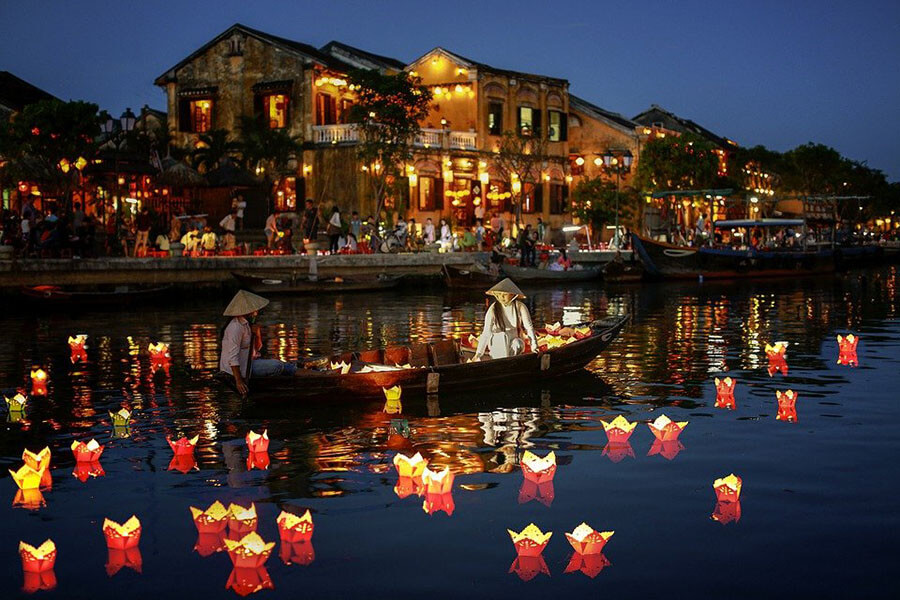
Every Hanoi Halong Bay Hoi An tour saves Hoi An for last, and with good reason. The UNESCO-listed Ancient Town is Vietnam’s most immediately beautiful destination — a compact grid of 15th–19th century trading port architecture, painted in mustard yellow, draped with silk lanterns, and bordered by the Thu Bon River.
The Ancient Town by Day and Night
Hoi An’s Ancient Town is pedestrianized in the evenings, when the lanterns are lit and the atmosphere transforms into something genuinely magical. The Japanese Covered Bridge, the Assembly Halls built by Chinese merchant communities, and the narrow streets lined with tailor shops and fusion restaurants reward slow, aimless walking.
By day, the countryside around Hoi An offers excellent cycling routes through rice paddies, fishing villages, and the My Son Sanctuary (ancient Cham Hindu temple complex, UNESCO listed). The beach town of An Bang, 3km from the Ancient Town, is one of central Vietnam’s best beaches for a half-day escape. Vietnam’s cuisine is world-renowned.
Hoi An is also Vietnam’s tailoring capital. Shops along Tran Phu and Le Loi streets can produce made-to-measure clothing in 24–48 hours at prices that are extraordinary by any standard.
What’s Included in Vietnam Tour Packages
Standard Vietnam travel packages from Singapore typically include:
- Return international flights from Singapore to Hanoi or Ho Chi Minh City
- Domestic flights (e.g., Hanoi–Da Nang, Da Nang–Ho Chi Minh City)
- Hotel accommodation rated 3-star to 5-star
- Ha Long Bay cruise (1 or 2 nights, depending on package tier)
- Airport transfers and intercity transport
- English-speaking local guides for sightseeing days
- Entrance fees for major sites (Imperial Citadel, Temple of Literature, Ancient Town)
- Selected meals (breakfasts, cruise meals, and some group dinners)
Not included: personal spending, beverages, optional activities (cooking classes, bicycle hire, spa), travel insurance, and tips. Budget 400,000–600,000 VND (~USD 15–25) per day for incidentals. Beyond sightseeing, discover Vietnam’s festivals and nature adventures from traditional celebrations to trekking in Sapa.
Best Time for Vietnam Tours from Singapore
Vietnam’s regional climate varies significantly. Timing your tour affects comfort across the different zones:
- Hanoi and Ha Long Bay: October to April — cool, dry, optimal. Avoid July–September (typhoon risk, rough Ha Long Bay seas)
- Hue and Da Nang: February to August — sunny and warm. Avoid September–November (heavy seasonal rains)
- Hoi An: February to August mirrors central Vietnam conditions
First time in Vietnam? Our complete Vietnam travel guide covers visas, transportation, and region-by-region highlights.
For a full north-to-south Vietnam tour package, November through April is the most reliable window across all regions. The shoulder months of September and May offer lower prices and fewer crowds, particularly in Hanoi.
FAQ
How many days do I need for a Vietnam tour package?
Ten days is the standard recommendation for the classic Hanoi–Ha Long Bay–Hue–Da Nang–Hoi An route. Seven days is manageable for two regions. Five days or fewer limits you to a single city focus and misses the country’s defining variety.
Do Singaporeans need a visa for Vietnam?
Singaporean passport holders currently enjoy visa-free entry to Vietnam for up to 45 days. Always verify current requirements before booking as policies are subject to change.
Is a Ha Long Bay day trip enough?
No. The overnight cruise experience is fundamentally different from a day trip. The magic of Ha Long Bay — mist rising off karsts at dawn, kayaking into hidden lagoons, dining on fresh seafood with the bay to yourself — requires staying overnight. Always book at least a 2-day/1-night cruise.
What’s the best way to travel between Vietnamese cities?
For time efficiency, domestic flights are the recommended option between Hanoi and Da Nang (1.5 hours vs 14 hours by train). The Hanoi–Ha Long Bay leg is typically a bus or private transfer (4 hours). The Da Nang–Hoi An leg is a 30-minute private transfer.
Can I combine Vietnam with other SEA destinations?
Yes. Popular combinations from Singapore include Vietnam + Cambodia (Siem Reap/Angkor Wat) or Vietnam + Laos. After Vietnam, extend your journey to Bali tour experiences for tropical island adventures and cultural immersion.
Ready to Find Your Perfect Vietnam Tour Package?
From the limestone karsts of Ha Long Bay to the lantern-lit streets of Hoi An, Vietnam delivers one of Southeast Asia’s richest travel experiences at a price point that consistently exceeds expectations. Browse Vietnam tour packages on FindTourGo and compare 200+ itineraries from trusted operators — with verified reviews, transparent inclusions, and flexible departure dates.
Looking for contrast? Pair Vietnam’s street culture with Japan tour packages for a East Asia + SEA journey.